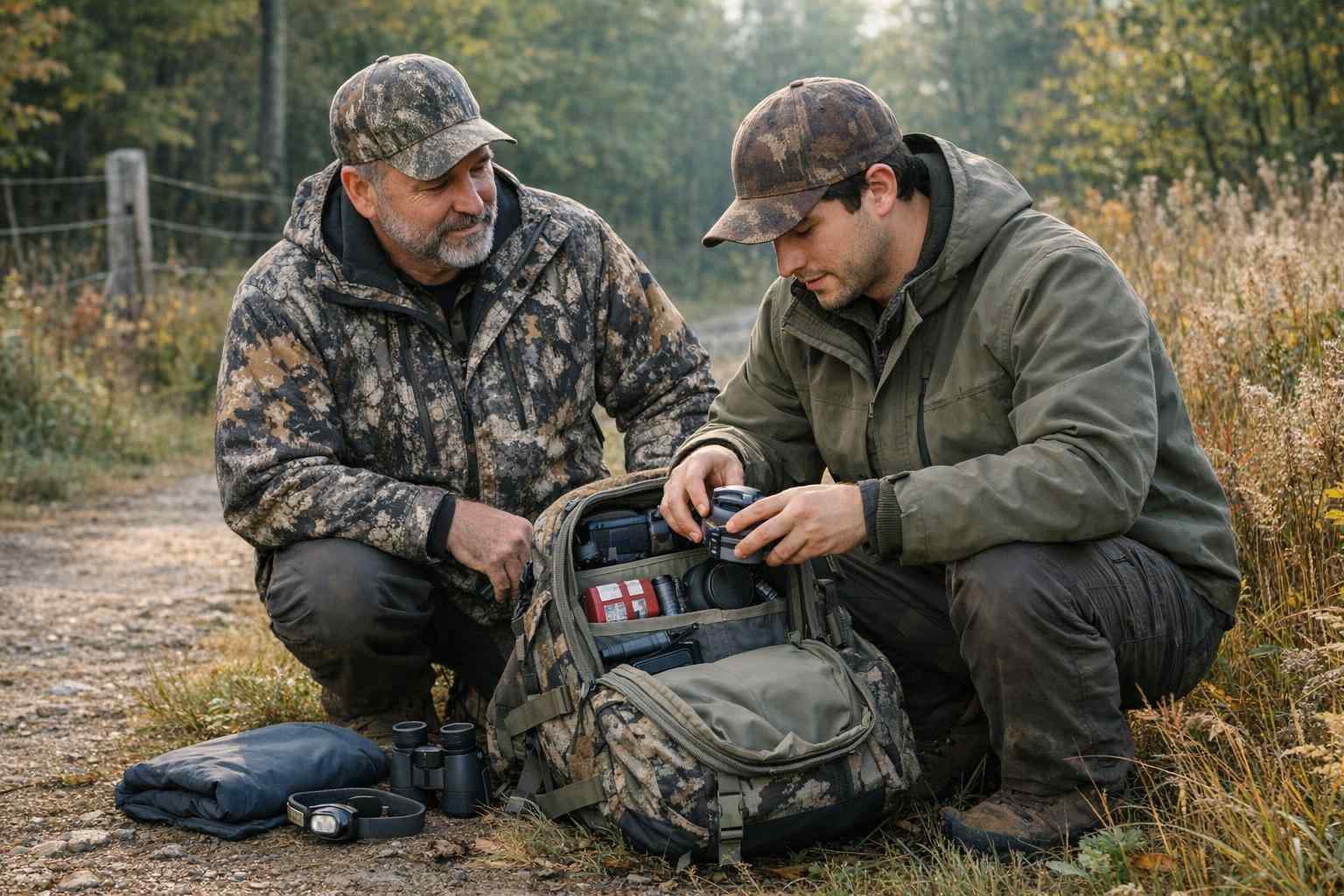
Hunting seasons can get very crowded. People with tags to fill, and others just trying to learn the basics of the sport. Time, property, and daylight are often in short supply. Don't let the new hunter on your team spend the whole season feeling clueless, unsafe, or disheartened. Give them something meaningful to do on your hunting trips. Introduce them to the nature of observation, teach them to ask good questions, to make wise decisions, and show them the type of patience that helps to connect your faith with the great outdoors.
Set the Season's Purpose Before Opening Day
Before heading out to hunt it is beneficial to sit down with your hunter and review what their goals for the hunt are. Do they want to fill a tag, learn the fundamentals of hunting or just spend time in the outdoors? There are many ways to have a good hunting trip and until you know what your hunter is looking to get out of the experience it is best to lay out a plan.
As with any activity, there needs to be clear guidelines for who is in charge and how to give and follow instructions on the hunt. More often than not, a beginner hunter expects the more experienced mentor to guide them every step of the way. But equally as common, the mentor expects the student to act independently. Discussing and agreeing upon before hand how you will give and follow instructions is essential to a good and safe hunt.
If you are a Faith-Based hunter you don't have to necessarily remove the aspect of preparation prior to entering the woods but it gives new purpose to your time spent getting ready. So you would continue to prepare but now with moral purpose behind it. Help an animal, help a landowner, help your fellow hunters, other outdoorsmen and women who may be using the woods and verify that all of your companions are prepared and ready for safe entry into the woods.
Check the Person Before Checking the Gear
While equipment problems are obvious, readiness problems with a hunter often surface before you leave with them. Look for things like a hasty pace, frequent confusion about the details of the plan, reluctance to ask questions or point out mistakes, inattention to your surroundings and the hunter's progress, and obvious fatigue that makes basic decisions harder than they should be.
In reviewing with your mentee the details of the hunt, go through the checklist of the following: route to be taken, expected conditions (weather, etc.), means of communication, clothing, food and water to bring, emergency contacts, etc. Reviewing this information with your hunter in a conversational style will often reveal critical information that was not apparent in a simple yes/no question. For example, asking your hunter to describe in their own words where you will be going, what the property lines are, and what to do in case of separation can often uncover critical information that was left out in a yes/no question.
Check your own behavior as well. Chances are that the person with more experience has forgotten some of the steps that he took on his first hunt. Go through the gear with your hunter and make sure that all of the necessary items are packed. Also, make sure that all of the hunting equipment is being used in accordance with the current laws and manufacturer's instructions for that particular piece of gear.
Give the New Hunter Real Decisions
Mentoring takes on a very thin form if all a hunter ever does is be carried along by their mentor. Allow the beginner to choose where you are going to hunt, decide what route you are going to take, how you will go (i.e. in what fashion) and why you are headed in a particular direction. Allow them to tell you what signs of animal activity that you have observed mean.
Much better to have a series of short conversations during the quiet wait of a hunt rather than reading out a long lecture from the back of a truck. Teach a skill, have the student try it out and then discuss what they found out.
As a hunter, even one who has practiced for years, there are things that one must be very clear on before taking someone new out. Things like how to safely handle a gun, how to correctly identify target and non-target species, what constitutes a backstop, property boundaries, and all of the rules that apply to where you are hunting.
Notice Small Problems Before They Become Field Problems
Maintenance of our equipment can reveal problems while we are still at home. The items which may seem insignificant, a loose strap, a damp item, a dying battery, a lens that is fogging, and uncomfortable boots, all have the potential to cause problems for our hunting partner on our next field trip.
Ask the new hunter to go through his or her equipment before departure. Watch as they search for lost small items such as matches, pens, etc. See how they sort out their gear and make decisions as to what to bring. A simple system of labeling equipment and keeping similar items together can be enough to help a hunter remember what they have brought and where it is located. Simplicity is key when it comes to remembering to bring gear in adverse conditions.
When writing down the things that worked and failing points make a note of what problems your equipment caused you. Do not turn this into a shopping list of latest models though – simply list the repairs, cleaning, and replacements that your outdoor gear needs.
Share the Work of Caring for Habitat
Leave a space for the relationship to develop over the length of the season, focus the new hunter on how to get into and out of the hunting area in the least amount of impact, respect the property of others and follow all of the rules of the property that you are hunting on including closing all gates as you found them. Be sure to take all of your trash with you and avoid damaging plants and soil in adverse weather.
All we ask is for you and your guest(s) to monitor for trail deterioration, observe changes in vegetation and collect data on any signs of erosion. Also, be aware of areas where human activity is negatively affecting the area and report this to local sources that can give us more accurate trends and make appropriate management decisions.
Upon returning to your vehicle, after having harvested an animal, work to complete the required task in an orderly and respectful fashion. Just because new hunters look to us for answers, does not mean we have to treat them like children. Acknowledge the weight of the situation and explain the responsibilities that we, as hunters, have towards the animal that we have harvested.
Leave Space for the Relationship to Grow
Whether or not any animals are brought home by the hunter during the course of the season is of little relevance to developing a relationship with a mentor. Are all things clear? Are there any areas of discomfort? How might the hunter be progressed in the future? These are all good questions to ask at the end of a season.
Seeking the advice of a conservation officer, a land owner, a hunting guide or an outdoor expert such as a hunting instructor and providing the most current and accurate information (as it pertains to the laws etc. of the area) to the mentee, models humility and is an important component of being an informed and responsible outdoor person and guide.
Turn your shared time into a worthwhile shared season. Give the other person time to grow and develop as a hunter, and slowly but surely take yourself out of the equation. Give them the chance to get ready for hunting on their own, to develop their judgment, to take care of the outdoor places that you share with them, and to make good, responsible decisions about hunting while ensuring that they do everything lawfully and with the highest moral principles.