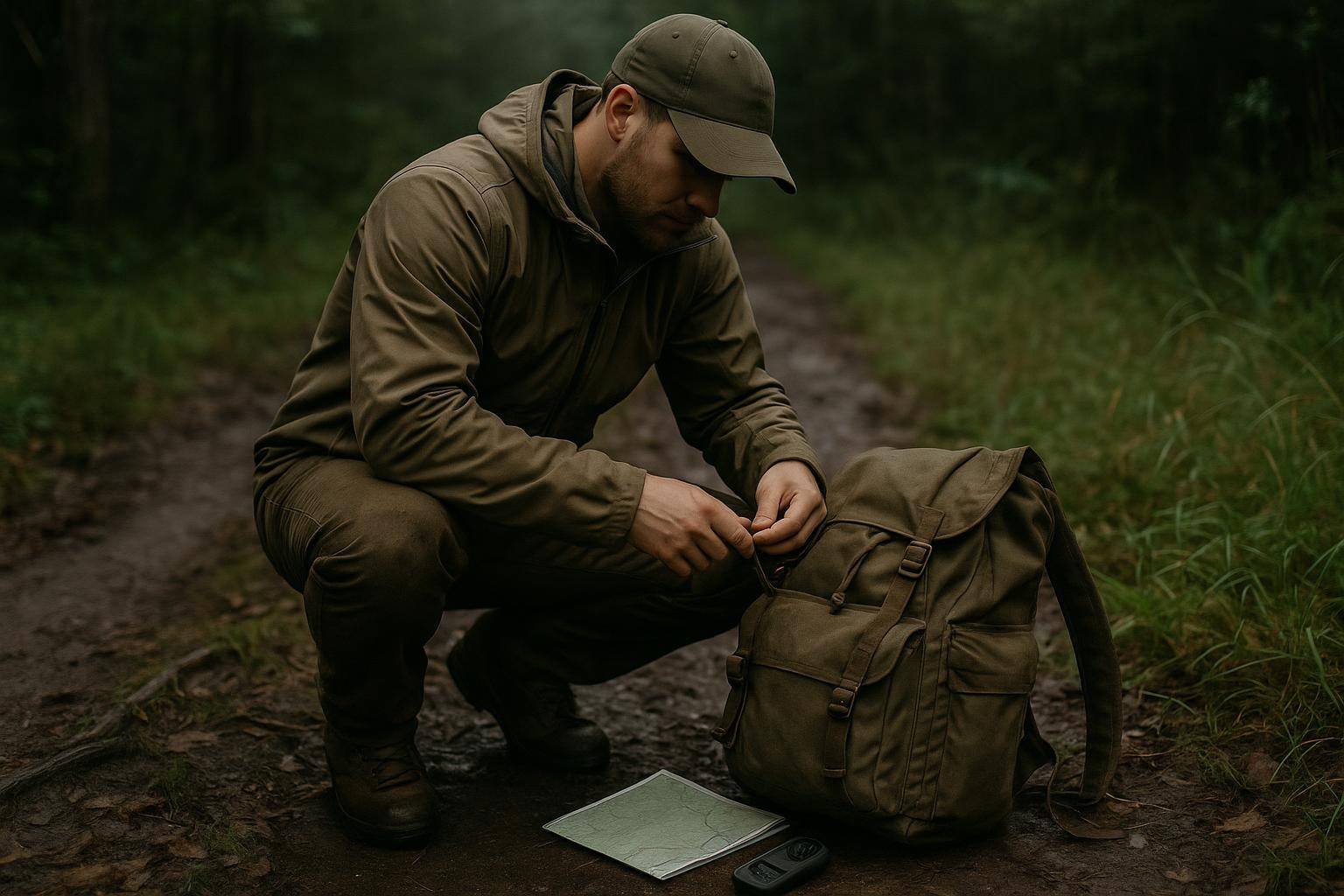
A common misconception is that a good hunting setup starts with the most capable equipment. It starts earlier, with an honest reading of the conditions in front of you. Weather, terrain, animal movement, access, visibility, regulations and your own limits should determine what you carry and where you sit. That approach saves weight, prevents avoidable mistakes and supports ethical hunting. It also gives you a useful habit: treat warning signs as information, not inconveniences to be ignored.
Start with the ground, weather and wind
Begin by studying the route, not the stand or blind. Mark steep slopes, wet crossings, thick cover, likely travel corridors and places where a safe shot would be impossible. A setup that looks promising on a map may become unsuitable after rain, frost, high water or a change in access.
Weather is more than a comfort issue. Wind can scatter scent, reduce hearing and make a position unstable. Heavy rain may erase tracks while creating fresh movement along protected edges. Heat can shorten the time meat remains safe after a harvest, while cold and wet conditions can quietly drain concentration. None of these signs automatically cancels a hunt, but each should change the plan.
Check the forecast from more than one reliable source, then compare it with conditions on the ground. Watch for symptoms that deserve a change of plan: rising water, glazed or unstable footing, lightning, worsening visibility, equipment that will not stay dry, or fatigue that affects judgment. If a route or position becomes unsafe, leaving is a responsible decision, not a failure.
Let animal sign answer practical questions
Fresh sign is useful only when read in context. Tracks, droppings, browse, rubs, beds and disturbed ground can indicate use, but they do not guarantee that an animal will appear where you want it to. Ask what the sign says about timing, direction and pressure. A trail crossing may be active, yet the wind, human activity or changing food sources may make another location more sensible.
Look for freshness without pretending to precision. Weather can alter sign quickly, and old disturbance may look more recent than it is. Compare several clues rather than relying on one attractive track. If sign is abundant but there are no connecting beds, feeding areas or escape routes, reconsider whether you are reading a travel pattern or simply finding a place animals pass occasionally.
Your setup should fit the likely opportunity. Choose a position with a clear, safe field of view, a quiet approach and a realistic recovery route. Do not force a shot because the location required effort to reach. Ethical hunting means accepting that conditions, not desire, decide whether an opportunity is suitable.
Match equipment to the actual problem
Gear should solve a condition you have identified. For a long approach, reduce unnecessary weight and protect the items that would end the day if they failed: navigation, communication, weather protection, light, water and first-aid supplies. For wet ground, focus on dry layers, secure footing and a way to protect essential gear. For cold, check that your clothing still works when stationary, not just while walking.
Before leaving, inspect the symptoms of neglected equipment. Frayed straps, cracked buckles, loose fasteners, damaged waterproofing, a dim light, dead batteries, a fogging optic or a poorly fitting pack can become serious problems away from the vehicle. Clean and maintain equipment according to its maker's instructions. Do not improvise unsafe weapon modifications, and do not rely on a familiar item simply because it worked on the last trip.
A useful pre-hunt checklist is short:
– Weather, wind and daylight checked against the route.
– Legal season, method, tag, access and land rules verified.
– Footwear, clothing, navigation, communication and light inspected.
– Firearm or archery equipment handled safely and checked for serviceable condition.
– Harvest, field-care and recovery plan considered before departure.
– A trusted person knows the area, route and expected return time.
The checklist is not a substitute for judgment. It is a way to catch small failures before they become field problems.
Build ethics into the setup
A responsible position gives you more than visibility. It gives you a safe backstop or safe direction, a clear target identification process and enough time to make a deliberate decision. If brush, darkness, distance or movement prevents certainty, do not take the shot. No piece of equipment can correct poor identification or an unsafe angle.
Plan for what happens after a successful harvest. Consider access for recovery, terrain that could complicate retrieval, cooling and transport needs, and whether you can handle the task without rushing. If a shot does not produce the expected result, mark the last known location and search carefully according to local practice rather than immediately assuming a miss.
Christian hunting is best expressed through stewardship: gratitude without entitlement, restraint without embarrassment and respect for the animal, the land and other people who use it. That includes leaving gates as found, avoiding unnecessary disturbance, packing out waste and passing up an opportunity when the conditions do not support a clean, lawful harvest.
Verify rules before the trip, not at the trailhead
Regulations can change between seasons and may differ by jurisdiction, species, weapon, public or private land, harvest area and reporting requirement. Confirm current information through the relevant official wildlife or land-management authority before hunting. Check season dates, licenses, tags, legal methods, shooting hours, transportation rules, blaze or visibility requirements, bait restrictions, carcass movement rules and any access closures.
Keep a record of what you verified and carry the required documents in an accessible form. If guidance is unclear, ask the responsible agency before going afield; do not treat an old regulation summary, a friend's memory or an online comment as final authority.
Conditions can change after you arrive. A closed road, new fire restriction, sudden storm, injured partner or unexpected crowd may make the original setup unsuitable. Reassess without resentment. Good preparation does not guarantee a harvest. It makes the lawful, careful and compassionate choice easier when the field refuses to cooperate.